







Every self-employed person faces this at some point: you’ve bought goods, but suddenly you can’t sell them. They gather dust in your warehouse, whilst your money disappears. How do you deal with this, both practically and in your accounts?
What exactly are unsaleable trade goods? 🔍
Put simply, trade goods are products you buy to sell later. Yet things don’t always go to plan. Perhaps the government has introduced a specific ban on certain goods, perhaps the products are damaged, or perhaps the hype has already died down.
Why does that inventory sometimes remain unsold? 🕸️
There are various reasons:
- New regulations: think of a product that suddenly can no longer be sold.
- Damage or defect: a delivery that has got wet, boxes damaged during transport…
- Due date: food or cosmetics that are simply too old.
- New trend: what’s a bestseller this year may be completely out of fashion next year.
Everyone involved in inventory management knows this is part and parcel of the job.
What do you do for the books? 🧮
Fortunately, there’s no need to panic; it’s usually simpler than you think.
When you make purchases of goods, you record them as an expense. At the end of the year, you tally up your inventory. Goods you can no longer sell are simply removed from the closing inventory.
A simple example 📦
Suppose you purchased €5,000.00 worth of trade goods for resale in 2024. By December, you discover that €1,500.00 of this is unsaleable.
Initial inventory: €5,000.00
Closing inventory: €3,500.00
Difference: €1,500.00
That loss is automatically recorded as an expense. Your profit therefore decreases by €1,500.00 without you having to do a separate booking. Fortunately, Dexxter ensures this happens automatically.
Be careful with VAT!
Are you subject to VAT and are you dealing with significant losses of trade goods? Then it is best to contact the VAT authorities. You can do this by email or registered post. You are, as it were, inviting the tax authorities to witness the destruction of the inventory. Contact the VAT authorities if you are in any doubt.

Don’t forget your records 🗃️
Although your bookkeeping often solves things neatly, it’s wise to note down exactly what has gone missing.
For example, make a list of:
- Product names
- Amounts
- Purchase prices
- Reason why they are unsellable
Also keep supporting documents where possible. Don’t forget emails from your supplier, an official letter from the government, or even a photo of damaged products. This way, you can always demonstrate later why that inventory could no longer be sold.
How do you actually limit future losses? 📊
You can’t prevent everything, but you can manage your inventory more effectively. For example:
- It’s better to do several small orders than one large one that just gathers dust
- Keep a close eye on trends and new regulations. That way, you won’t be caught off guard.
- Apply the “FIFO: first in, first out” principle: sell your old stock first, then the new stock.
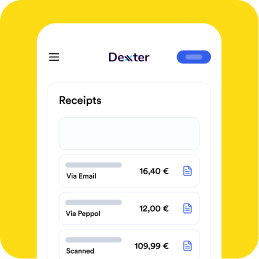
- Use software such as Dexxter to keep a clear track of your inventory.
With a clear summary, you can make decisions faster. This prevents you from being left with boxes that nobody wants to buy again.
Ready for a smoother accounting process 🪷
Unsellable trade goods are a nuisance, for sure! But there’s really no need to stress about it. In most cases, the accounting system automatically registers the loss via the stock adjustment. The only thing you need to do is keep your records tidy and clearly document what’s going out.
This way, you’ll stay on top of your figures and avoid unpleasant surprises. And who knows: with better planning and smarter stock management, you might even feel a sense of satisfaction next time when you know exactly what’s in your warehouse… without euros disappearing from your till without you noticing.
Useful URLs
Purchases of trade goods: What you need to know!
TPO ban from 1 September 2025: how to account for the loss in your books with Dexxter