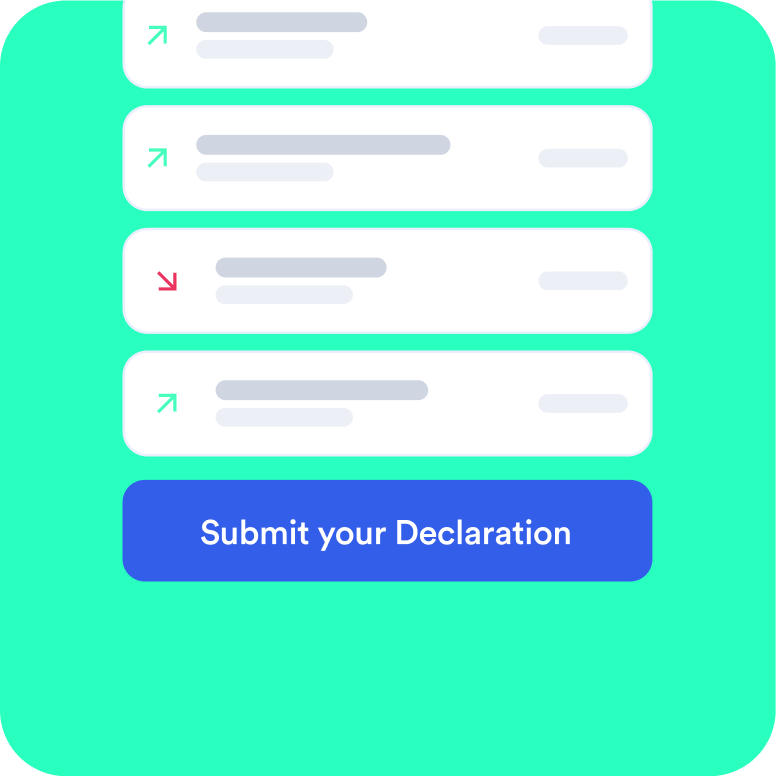





On the one hand, you need to submit a special VAT declaration. We have a video ready to guide you through the submission process.
But on the other hand, you’ll naturally want to record that VAT paid in your accounts.
How do you record it?
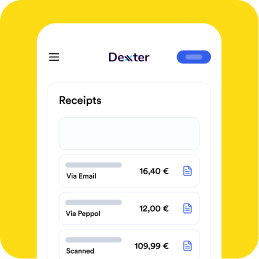
The paid VAT counts as an expense and can therefore be entered. You upload the special VAT declaration (or a related document) into Dexxter via the expenses, as if it were an invoice.
- You create a supplier of the type private person with the name ‘Special VAT declaration’.
- The invoice date is the date on which you pay the additional VAT.
- The amount is the amount of VAT paid via the special VAT declaration.
- For the cost category, select the category under which the original purchase was also recorded. You can be pragmatic in your choice; for example, if you have multiple categories, you can opt for the predominant cost category.
This ensures that the paid VAT is correctly recorded in your accounts.
Special VAT declaration: summary
A special VAT declaration (sometimes referred to as Form 629) applies only to businesses that are exempted from VAT.
If, as a business exempted from VAT, you have received an invoice from a European supplier on which 0% VAT has been charged (reverse-charged VAT), you must indeed pay VAT on this, but via a special VAT declaration! And you must also submit this declaration on a quarterly basis(does not exist in english).
For example, have you received a purchase invoice from a European supplier on which 0% VAT has been charged in January, February or March? In that case, the tax authorities expect you to submit a special VAT declaration between the 1st and the 25th following the end of the quarter.
- Quarter 1 -> deadline 25/04
- Quarter 2 -> deadline 25/07
- Quarter 3 -> deadline 25/10
- Quarter 4 -> deadline 25/01
Do you have no European purchase invoices with 0% VAT (reverse-charged VAT)? In that case, fortunately, you do not need to submit a special VAT declaration.
The tax authorities also automatically know which businesses that are exempted from VAT are required to submit a special VAT declaration. If you fail to submit this declaration when you should have done so, you may receive a rather unpleasant letter in the post. This means you will still have to pay the outstanding VAT, including interest and penalties.
Practical tip
From a practical point of view, it is therefore worth asking your supplier to charge VAT on your European purchases if you are exempted from VAT. They can treat you as a private person, in which case they will charge VAT immediately.
This isn’t always possible. For example, some shops will only let you buy if you have a company number. Or you might only get certain (volume) discounts if you provide a company number at the time of purchase.
But if possible, it’s best to ask your European supplier for an invoice with VAT. That saves you from having to submit a special VAT declaration.