



You order goods from a supplier in China. The invoice states DDP – delivery duty paid. This means that the seller takes care of everything right up to your doorstep: transport, import duties and even VAT.
In other words: the supplier pays the Belgian VAT on importation via customs. You will see this VAT immediately on the invoice.
Example:
You buy a device costing €1,000
Without DDP: you pay €1,000 to the supplier. Customs then charges a further 21% VAT upon delivery.
With DDP: you pay €1,210 directly to the supplier straight away. Customs is no longer involved.

Why is the Belgian VAT number missing? 🔍
Many self-employed people are alarmed: the invoice shows 21% Belgian VAT, but no Belgian VAT number. How is that possible?
The explanation is simple. The foreign company usually uses a customs agent or an IOSS (Import One Stop Shop) number. Through that system, the supplier pays the VAT to the Belgian tax authorities. As a result, the company does not need to have a Belgian VAT number.
Can you deduct the VAT? 🧮
This is the key question.
Unfortunately, in most cases you cannot deduct the VAT. To claim a VAT refund, you need an invoice with a valid Belgian VAT number. Without that number, the tax authorities do not consider the VAT to be ‘deductible’.
Example:
You pay €1,210 to your Chinese supplier. That amount includes €210 VAT. You cannot reclaim that €210. The full amount of €1,210 remains an expense.
Will you receive a document from customs? 📄
Not with DDP. The supplier has already taken care of everything. You will only receive the invoice.
Sometimes the transport company sends a separate document. And even if you have received such a document: it usually does not contain any information that allows you to claim VAT back.
How to sort it out stress-free 🪷
- Keep the invoice. You’ll need it for your accounts.
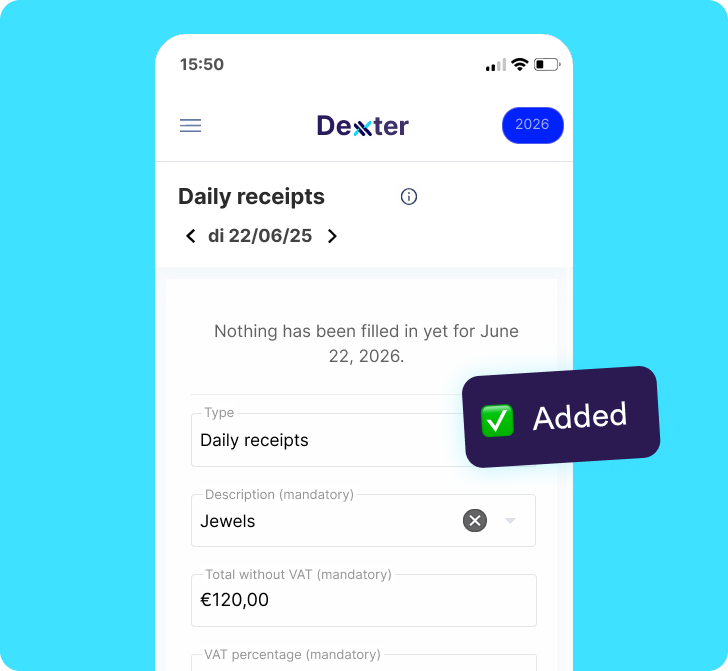
- Record the full invoice as an expense. Without a Belgian VAT number, you cannot deduct the VAT. When entering it into Dexxter, the amount excluding VAT remains the same as the amount incl. VAT, and Dexxter takes care of the rest.
- Think ahead with large purchases. Sometimes it’s smarter to import the goods yourself. Then you pay VAT directly to customs and can reclaim that VAT.
In a nutshell 🥜
- DDP = all-inclusive. The supplier handles transport, import duties and VAT.
- There is usually no Belgian VAT number on the invoice.
- Consequence: you cannot deduct the VAT. The entire amount remains an expense.
- Customs does not send any documents with DDP.
- For large investments: choose to import the goods yourself, so you can reclaim the VAT.
- For small orders, DDP can be handy, but be aware that you’ll lose the VAT.
Useful URLs 🔗
Processing dropshipping in your accounts
Accounting for e-commerce: How to process costs and income via online marketplaces