










Peppol legislation
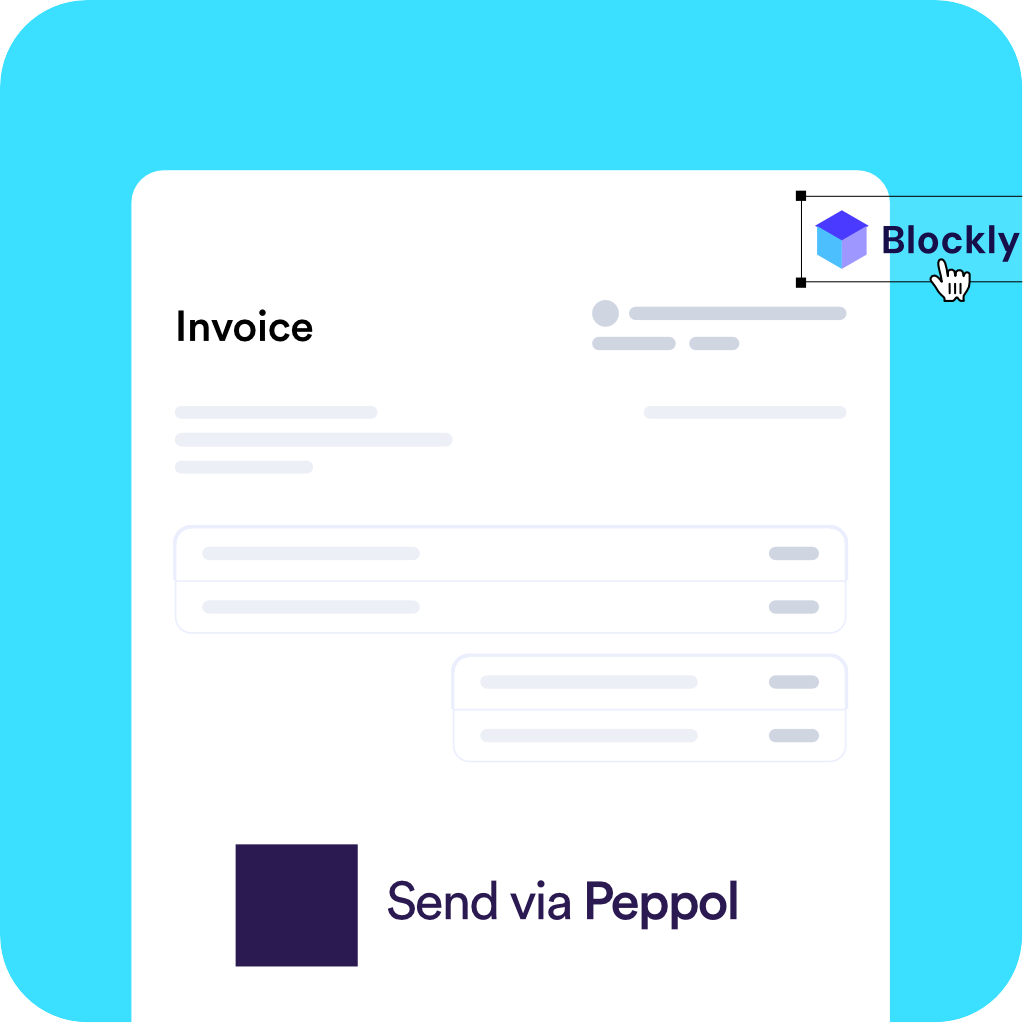
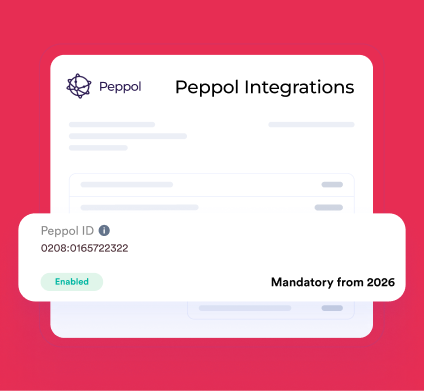
From 1 January 2026, every Belgian company that invoices other companies (B2B) must do so via the Peppol network (e-invoicing). This applies to companies subject to VAT and exempted from VAT that invoice other companies subject to VAT or exempted from VAT.
Are you a company not subject to VAT (e.g. a doctor), or do you only invoice companies not subject to VAT? Then Peppol is not required for you. You can use it if you wish to do so, but you don’t have to.
Are you a freelance web designer and do you invoice a marketing agency? Then that invoice must be sent through Peppol. The same applies if you are a graphic designer working for printing companies or a consultant providing advice to other companies. From 1 January 2026, a regular PDF or paper invoice will no longer suffice. This also applies to you as a sole proprietor, whether you are self-employed in main or secondary occupation.
This also means that your customers may simply refuse invoices that don’t comply. In addition, the government has provided for sanctions and fines. We list the fines and sanctions below.
Possible sanctions and fines for non-compliance with Peppol obligation
Anyone who does not follow the rules risks heavy fines. If you send a regular PDF invoice for €2,000 to a Belgian customer in April 2026, you risk a fine of €1,500, more than half of your invoice. The legislation provides for penalties of €1,500 for a first established violation. Anyone who reoffends will pay €3,000, and for repeated offenses, the amount rises to €5,000 per offense. There is, however, a tolerance: the government will give you a warning the first time without immediately imposing a fine. You will then have three months to get connected to the Peppol network.
| Violation | Fine |
| First violation | €1,500 |
| Second violation | €3,000 |
| From the third violation onwards | €5,000 |
There is a waiting period of three months between each fine.
In addition, there are also tax consequences. If an invoice should have been sent via Peppol but was wrongfully not sent that way (after 01/01/2026), the VAT administration will consider this as an unsent invoice.
So if you cannot receive your purchase invoices through Peppol, the VAT administration may decide that these invoices have never actually been issued. As a result, you will not be able to recover VAT on them.
Furthermore, your customer who has received an invoice from you that does not meet the conditions (i.e. not sent via Peppol) will probably not pay it either. Until you issue a correct invoice through Peppol.
If you receive a paper invoice or an invoice in a PDF or Word file after the Peppol deadline, protest it (by indicating that it does not meet the conditions for electronic invoices) and do not proceed with payment in the meantime.
How can you avoid expensive Peppol fines?
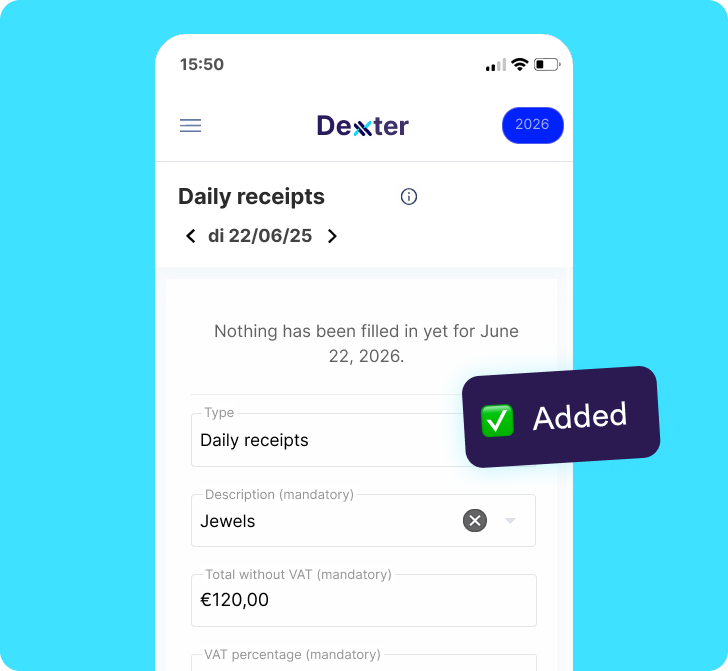
Fortunately, the solution is simple. Dexxter already has a Peppol integration, so start using it before 2026. Once the obligation comes into force, you must avoid sending only PDF or paper invoices to Belgian companies, as these will no longer be valid. Try Dexxter now for 30 days free of charge.
Conclusion
For sole proprietors, Peppol seems like yet another obligation on top of the many rules that already exist. But the consequences of non-compliance should not be underestimated: fines of up to thousands of euros, customers refusing your invoices, and the loss of VAT benefits.
Luckily, you can avoid all this by switching to Peppol in good time. Thanks to Dexxter, you can activate Peppol in two minutes and smoothly transition to this new working method. This way, you can start 2026 without any worries.