


What does an influencer do?
As an influencer, you promote products or services through social media like Instagram, YouTube or TikTok. You receive compensation in the form of money, free products, or other benefits. In return, the advertiser expects you to talk about or recommend their products or services to your followers.
There are different types of influencers, from micro-influencers with a few thousand followers to macro-influencers with hundreds of thousands or even millions of followers. How your income is taxed depends on the regularity and scale of your influencer activities.
Do you have to pay tax on your income as an influencer?
Yes, in Belgium you generally have to pay taxes on your income as an influencer, depending on how often and how much you earn. Below we explain two situations: if you are not self-employed and if you are self-employed.
Situation 1: You are not self-employed
If you are not self-employed and the benefits are occasional and negligible, you are generally not taxable. After all, selling something on a second-hand website does not make you taxable either.
However, if you receive substantial occasional income or benefits, that income may be taxable as “miscellaneous income” and taxed at 33% after deducting the costs actually incurred. You must report this income in your tax return.
Example: Suppose you receive a one-time payment of €500 for promoting a product. As this is a substantial payment, it is considered miscellaneous income and you will have to pay 33% tax on it, after deducting expenses such as travel costs or equipment you purchased for your work as an influencer.
Situation 2: You are self-employed
If you are an influencer and therefore receive money or benefits on a regular basis, you will be considered self-employed by the tax authorities. The risk of a tax audit is high if there are paid collaborations and the income has never been declared. In that case, the tax authorities may search for all income and benefits in kind that have been received in the past.
As a self-employed person, you will be taxed progressively on your income (and in principle also on the value of the products) after deduction of social security contributions and professional expenses. Progressive taxation means that this income is taxed as professional income and is therefore taxed at rates of up to 50%.
Self-employed workers are also required to pay social security contributions, which amount to a percentage of their net taxable income. These contributions are deductible, which means that they reduce your final tax burden.
In addition, you can deduct professional expenses, such as the cost of a camera, laptop, travel expenses, software, etc.
👀 Tip: If you are an influencer in secondary occupation, you can use this gross-net calculator to simulate how much tax you will have to pay.
Does an influencer have to charge VAT?
If you are self-employed, you are in principle subject to VAT. This means you must charge VAT on your invoices and remit it to the government. At the same time, you can reclaim VAT on your purchases, such as equipment and software that you use for your activities as an influencer.
There is an exception: if your annual turnover is below €25,000, you can choose the VAT exemption scheme. In that case you do not have to charge VAT, but you also cannot reclaim VAT on your purchases either.
Your accounting as an influencer via Dexxter
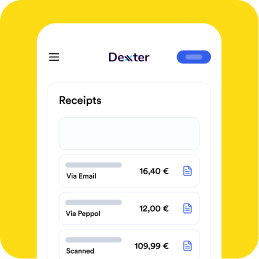
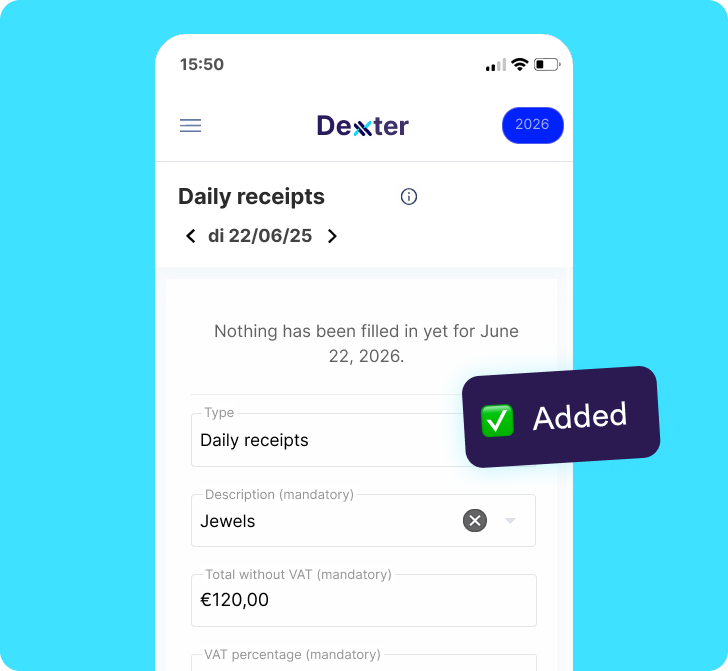
If you want to easily manage your influencer income and expenses and stay compliant with taxes and accounting obligations, Dexxter is here for you! It’s the #1 accounting tool for Belgian sole proprietorships who want to handle their own bookkeeping.
Start your free trial today. This will allow you to explore all our features at your own pace, perfect for influencers.